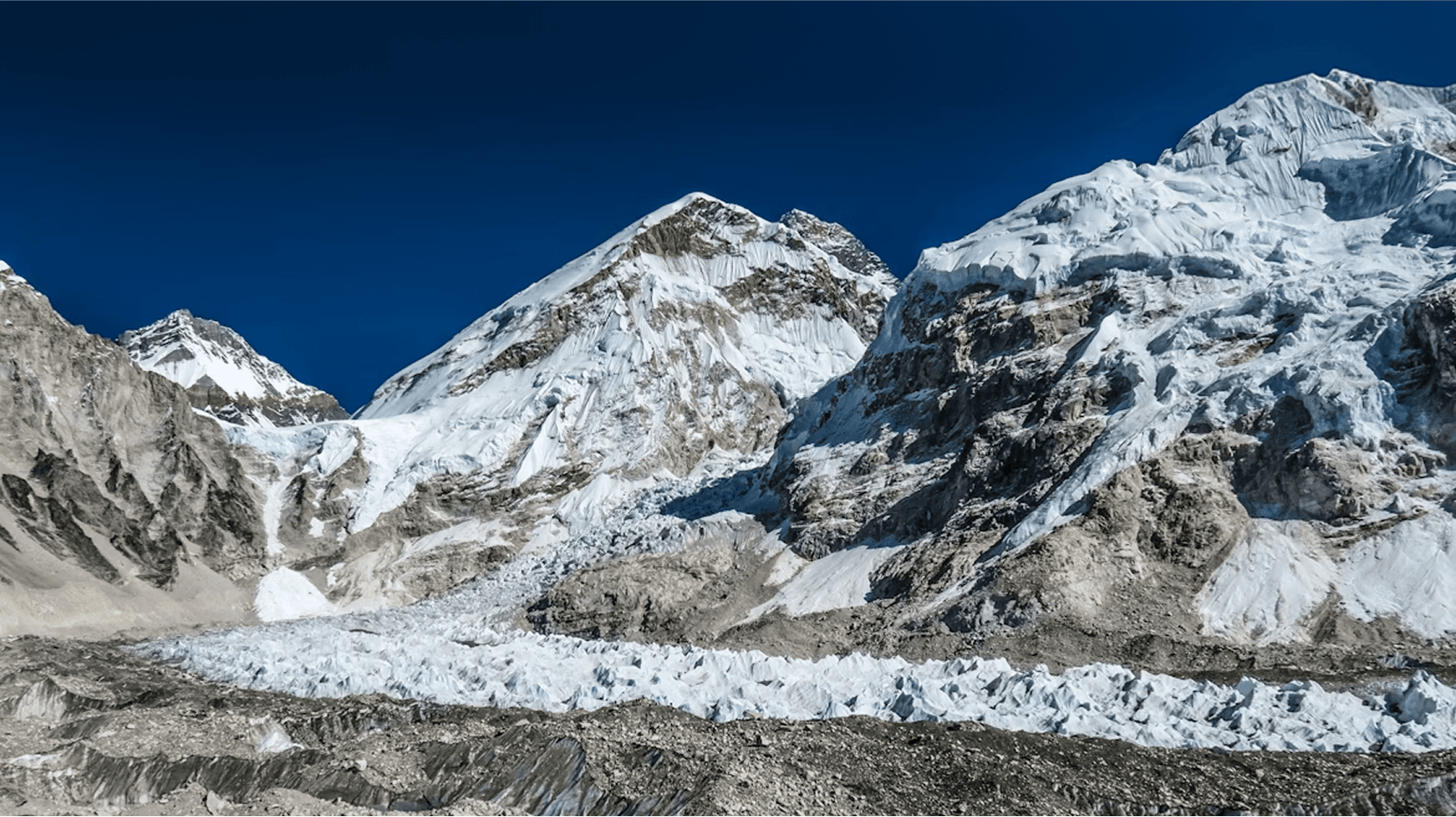
Khumbu Icefall Editor · June 24, 2026
The Khumbu Icefall is the most photographed and most feared section of the standard Everest route. It is also widely misunderstood. This article looks at what the hazard really is, who faces it, and what that means for trekkers and climbers.
A Glacier Moving a Metre a Day
The Icefall is the steepest section of the Khumbu Glacier, tumbling roughly 600 metres between Everest Base Camp and Camp One. Because the glacier moves around a metre per day, the terrain never stops changing: crevasses open overnight, ice towers the size of buildings lean and collapse, and the fixed route needs constant repair.
The objective hazard of the Icefall is time exposure. The route is not hard climbing; it is dangerous ground you want to cross quickly, early, and as few times as possible.
Who Is Actually Exposed
Three groups spend time in the Icefall, with very different exposure levels:
- The Icefall Doctors, who build and maintain the ladder-and-rope route all season.
- Climbing Sherpas, who make many round trips carrying loads to the upper camps.
- Expedition members, who typically cross a handful of times per season.
What This Means for Trekkers
The standard Everest Base Camp trek ends at Base Camp, below the Icefall. Trekkers view it from a safe distance and never travel on it. If an itinerary advertises entering the Icefall without a full expedition setup, treat that as a red flag.